March 28th 2026
Why a Respectful Workplace is Your Secret Business Weapon
Think of a company like a high-performance car. You can have the best engine (technology) and the most expensive fuel (funding), but if the parts are grinding against each other, the car will eventually overheat and break down.
Respect is the oil that keeps the engine running smoothly. When we build a Respectful Workplace (RWSL), we aren't just "being nice." We are building a foundation for a more profitable business. Here is how that connection works in simple terms:
1. Respect Creates "Belonging"
When people feel respected—meaning they are heard, treated fairly, and valued for their unique skills—they start to feel like they truly belong. They stop worrying about "fitting in" or protecting themselves from office politics and start feeling like part of a winning team.
2. Belonging Drives Productivity
When you feel you belong, you bring your "whole self" to work. You don't waste energy being stressed or anxious. Instead, that energy goes into:
Hard work: You’re more motivated to help the team succeed.
Better ideas: You feel safe enough to speak up with a new suggestion.
Staying put: You don’t look for a new job because you love where you are.
3. Productivity Boosts the Bottom Line
This is where the math happens. More focus and better ideas lead to higher-quality work. Lower turnover saves the massive costs of hiring and training new people.
The Result: A faster, leaner, and much more profitable company.
What the Numbers Say
The RWSL Summary Video highlights some eye-opening stats that prove this isn't just a "feeling"—it's a financial reality. According to the data:
Higher Engagement: Teams with high levels of respect are significantly more engaged in their daily tasks.
Reduced Turnover: Companies that prioritize a respectful culture see a massive drop in people quitting.
Profit Growth: There is a direct link between how employees feel treated and the year-over-year growth of the company’s revenue.
How to Get There
You don't need a massive budget to start. It begins with:
Listening: Truly hearing what your team has to say.
Fairness: Ensuring the "rules of the game" are the same for everyone.
Safety: Making it okay to point out a mistake or ask for help.
Bottom Line: If you want a better business, start by treating your people better. When respect goes up, the numbers follow.
Looking for a strategy for your company. Contact DCLK diversitycollectivelk@gmail.com
-Bani Chandrasena


March 31st 2026
On DEI Strategy
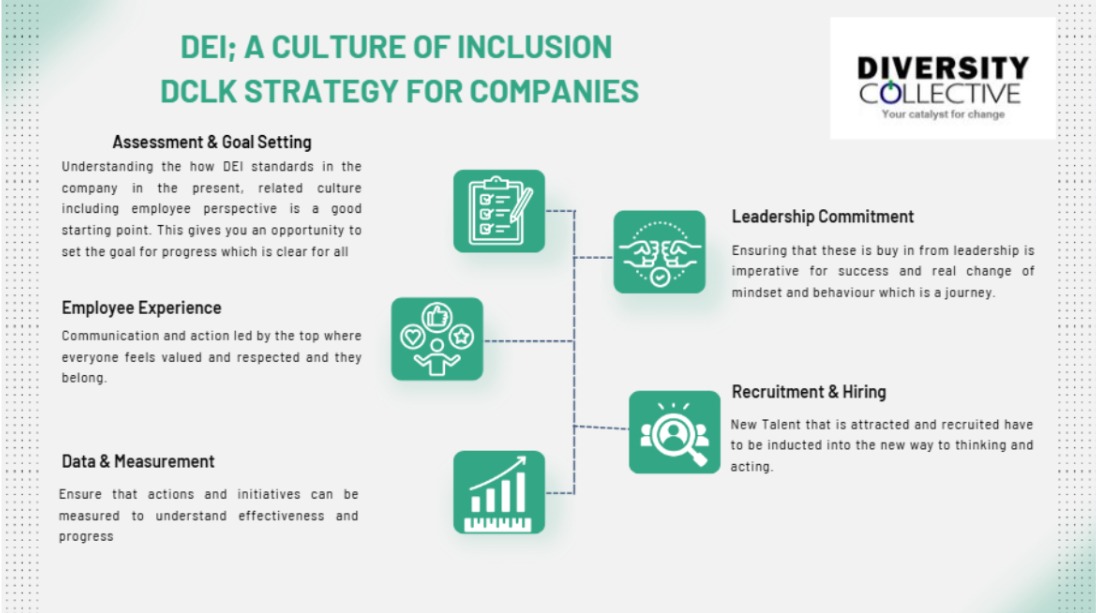
1. Assessment & Goal Setting
Figure out where you are and where you want to go. Before making changes, the company needs to look at its current culture and listen to what employees actually think. Once you know the starting point, you can set clear goals for improvement.
2. Leadership Commitment
Get the bosses on board. For real change to happen, the people at the top have to truly believe in it. It’s not just about signing a policy; it’s a long-term journey of changing mindsets and behaviors across the leadership team.
3. Employee Experience
Make everyone feel like they belong. This is about daily life at work. The goal is to create an environment where every single person feels respected, valued, and safe to be themselves, driven by open communication and positive actions. Culture of Respect is a great place to start in companies see RW Roadmap
4. Recruitment & Hiring
Bring people into the "new way" of doing things. It’s not just about hiring diverse talent; it's about how you welcome them. New employees should be introduced to the company’s inclusive culture from day one so they understand how to think and act within that framework.
5. Data & Measurement
Check your progress. You can't manage what you don't measure. This step involves using data to see if the initiatives are actually working or if they need to be adjusted to reach the company's goals.
Conclusion: Building a Future of Belonging
The DCLK Strategy provides more than just a checklist; it offers a sustainable roadmap for systemic change. By starting with honest Assessment, securing genuine Leadership Commitment, and focusing on the daily Employee Experience, companies can move beyond surface-level diversity.
Integrating these values into Recruitment ensures that new talent aligns with this inclusive vision, while constant Data & Measurement keeps the organization accountable and moving forward. Ultimately, a culture of inclusion is a journey, not a destination. When companies commit to these five pillars, they don't just improve their metrics—they build a workplace where every individual has the opportunity to thrive, innovate, and belong.
-Bani Chandrasena

March 28th 2026
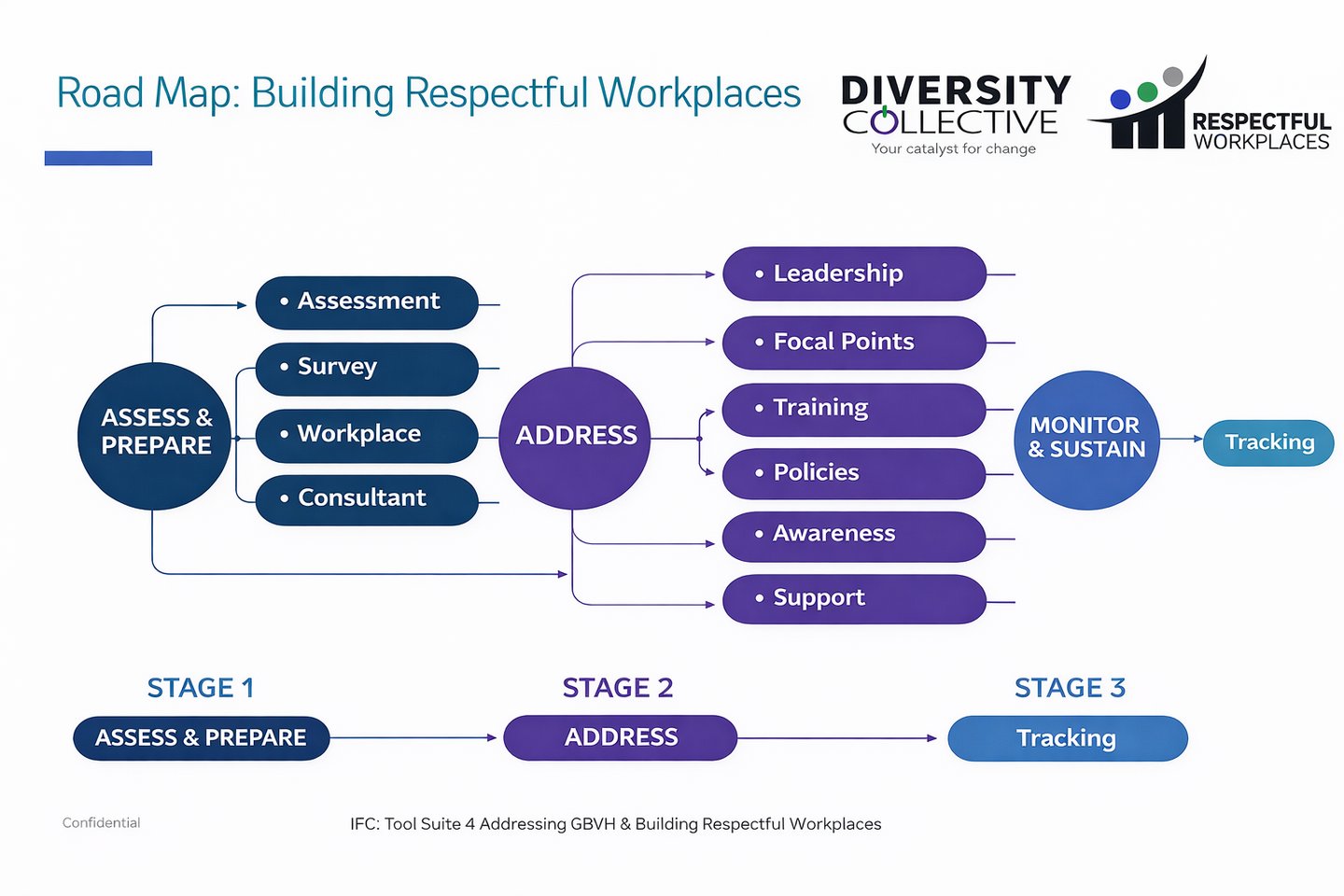
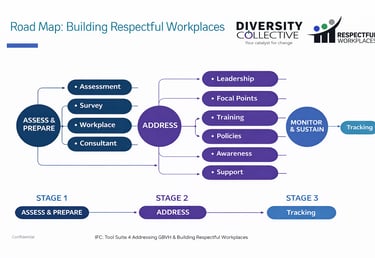
Road Map: Building Respectful Workplaces
Stage 1: Assess
Establish a clear baseline by understanding the current organizational climate. This involves deploying a Respectful Workplace Baseline Survey and conducting follow-up focus groups to capture genuine employee perceptions and identify specific cultural gaps.
Stage 2: Address
Execute targeted interventions to build foundational knowledge and systemic support.
Leadership: Conduct workshops to ensure decision-makers act as role models and drive the initiative.
Training: Provide Unconscious Bias and bystander intervention training to dismantle barriers and discrimination.
Policy: Develop or refine comprehensive workplace policies and establish clear grievance mechanisms.
Focal Points: Train a dedicated group (recommended 5% of staff) to serve as internal experts and support systems.
Awareness: Launch company-wide communication plans and inductions to ensure every employee understands their rights and responsibilities.
Stage 3: Sustain
Embed respect into the long-term corporate DNA through continuous oversight. This stage focuses on tracking progress against set targets, reviewing annual reports to identify emerging issues, and providing ongoing mental health support and counseling options for all staff.
“Respectful Workplaces; Culture of Inclusion based on a foundation of mutual Respect”
-Bani Chandrasena
Interested in becoming a member?


TRAINER


SUPPORT VOLUNTEER
DEI PROFESSIONAL
OFFICE BEARER
We’re looking for passionate individuals to join the Diversity Collective Lanka community! Whether you have a little time or some relevant expertise to share, or is passionate about this topic, there's a place for you here. Use the link below to register, and take a look at the different ways you can get involved




UNIVERSITY ENGAGEMENT
EARLY EDUCATION